Buying & Caring for a Brown Leather Wallet: The Complete Guide
The ultimate guide to buying and maintaining a brown leather wallet. Learn about leather grades, RFID protection, and essential cleaning tips for longevity.
A brown leather wallet is a timeless investment. Unlike synthetic materials that degrade, high-quality leather develops a rich patina—a unique sheen and depth of color—that tells the story of its journey with you. But to ensure your wallet ages gracefully rather than falling apart, you need to buy the right one and care for it properly.
In this guide, we cover everything you need to know: from spotting quality leather to the essential maintenance routine that will make your wallet last a lifetime.
Part 1: What to Look For When Buying
Not all leather is created equal. Here are the 4 key features that separate a cheap wallet from a masterpiece:
1. Leather Grade: The Foundation
- Full-Grain Leather (Best): Uses the entire outer layer of the hide. It is the strongest, most durable, and the only grade that develops a true patina.
- Top-Grain Leather (Good): Sanded to remove imperfections. It is smoother and more stain-resistant but lacks the rugged character of full-grain.
- Genuine Leather (Avoid): Often made from bonded scraps. It peels and cracks quickly.
2. Tanning Method: Veg-Tan vs. Chrome
Vegetable-tanned leather uses natural tree bark tannins. It smells earthy, feels rigid at first, and patinas beautifully. Chrome-tanned leather uses chemicals for a softer, uniform color that won't change much over time.
3. Craftsmanship Details
Inspect the stitching. Nylon or polyester thread is stronger than cotton. Look for "turned edges" (where leather is thinned and folded) or "burnished edges" (sealed and polished) to prevent fraying.
4. Modern Functionality
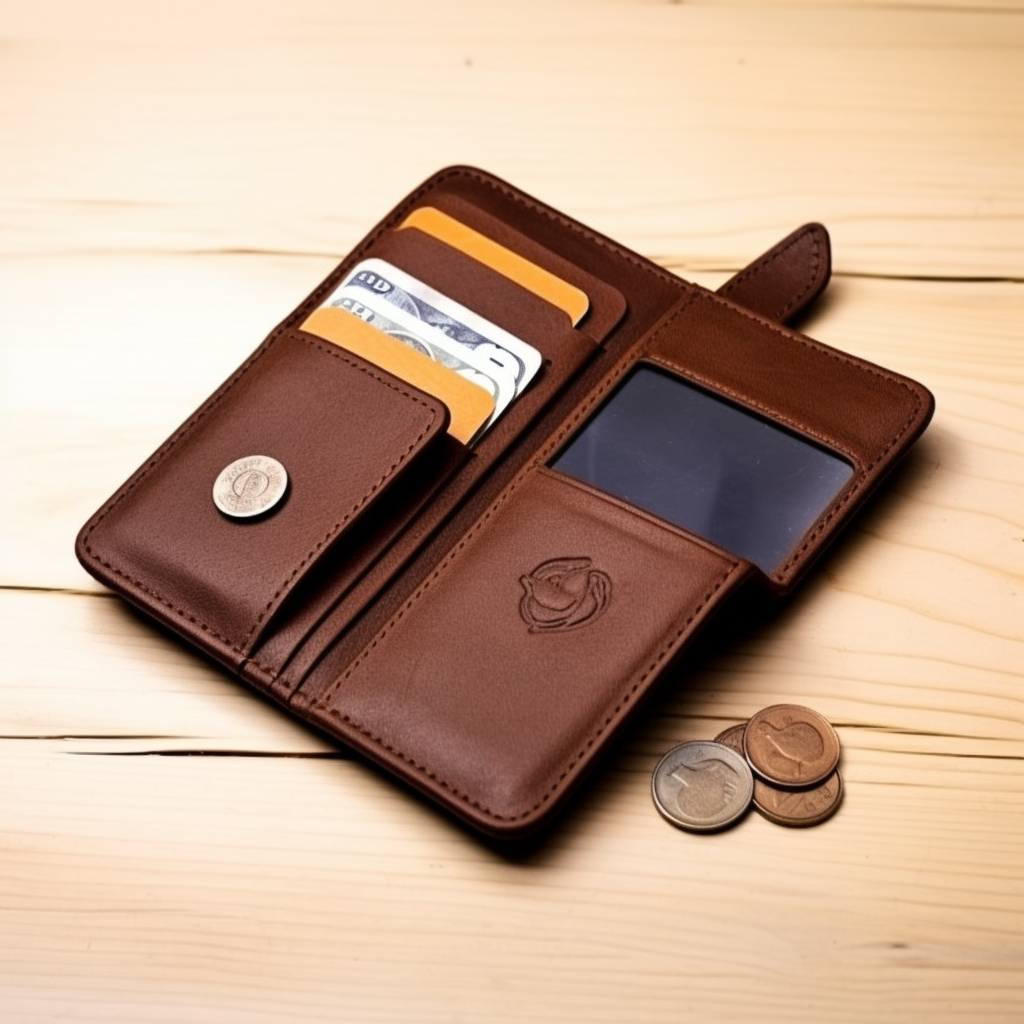
Does it fit your life? Look for RFID-blocking technology to protect your cards from skimming, and ensure it has enough slots for your essentials without encouraging overstuffing.
💡 Pro Tip: Smell It!
Real, high-quality leather should smell rich and earthy. If it smells like chemicals or plastic, put it back.
Part 2: How to Clean & Maintain Your Wallet
Brown leather shows oil stains and water spots more than black leather. Here is how to keep it pristine:
The Weekly Routine
- Empty It Out: Remove receipts and unnecessary cards. Overstuffing stretches the leather permanently.
- Dust It Off: Wipe the exterior with a dry microfiber cloth to remove surface dirt.
Deep Cleaning (Every 3-6 Months)
If your wallet looks grimy or dry:
- Damp Wipe: Use a slightly damp cloth with a tiny amount of leather cleaner or mild soap. Rub gently in circles.
- Dry Naturally: Wipe away residue and let it air dry. Never use heat (hairdryer/radiator), as it will crack the leather.
- Condition: This is crucial. Apply a leather conditioner to replenish oils. It will darken the leather slightly, enhancing the rich brown tone and keeping it supple.
🚫 Stain Removal Hacks
- Water Spots: Let dry naturally. If spots remain, dampen the entire area slightly to blend them.
- Oil/Grease: Sprinkle cornstarch on the spot overnight to absorb the oil, then brush off.
- Ink: Consult a professional. DIY remedies often remove the dye along with the ink.
Conclusion
A brown leather wallet is a companion, not just an accessory. By choosing full-grain leather and dedicating a few minutes to care every few months, you ensure that your wallet doesn't just survive daily use—it thrives, developing a unique character that is unmistakably yours.
Next Up:
What are the different types of brown leather wallets available for women?

Creative director at ChicCuir, overseeing seasonal collections and brand visual identity.