Is Crocodile Leather More Expensive Than Alligator Leather?
When shopping for high-end luxury goods, you'll often encounter two heavyweights of the exotic leather world: crocodile and alligator. Both command premium prices and exude sophistication, but one question often stumps even the most seasoned fashioni...
When shopping for high-end luxury goods, you'll often encounter two heavyweights of the exotic leather world: crocodile and alligator. Both command premium prices and exude sophistication, but one question often stumps even the most seasoned fashionistas: Is crocodile leather more expensive than alligator leather?
The short answer is: It depends on the species. generally speaking, Porosus Crocodile is the most expensive leather in the world, often surpassing American Alligator. However, high-quality American Alligator is typically more expensive than other common crocodile species like Nile or Caiman.
In this guide, we'll break down the price differences, the hierarchy of luxury leathers, and how to spot the difference between these two reptilian rivals so you know exactly what you're paying for.
The Luxury Leather Price Hierarchy
To understand the price difference, you have to look at the specific species. Not all "crocodile" leather is created equal. Here is the general hierarchy of value in the luxury market, from most expensive to least expensive:
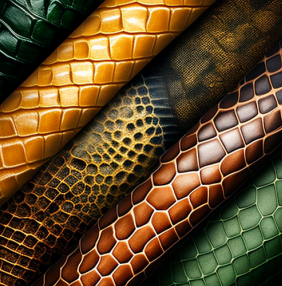
- Porosus Crocodile (Crocodylus porosus): The undisputed king of exotic leathers. Sourced mainly from Australia and Southeast Asia, this saltwater crocodile has a symmetrical, small scale pattern and is highly prized by top fashion houses like Hermès.
- American Alligator (Alligator mississippiensis): Native to the Southeastern USA, this skin is famous for its lack of bone content (making it softer) and its elegant, less-porous scales. It is extremely valuable and close in price to Porosus.
- Nile Crocodile (Crocodylus niloticus): Found in Africa, this is a very common high-end leather but typically commands a lower price than Porosus or American Alligator due to slightly larger scales and more frequent scarring.
- Caiman Crocodile (Caiman crocodilus): Sourced from Central and South America, this is the most affordable and common "crocodile" leather. It is more rigid due to calcium deposits in the scales and is considered an entry-level exotic skin.
Crocodile vs. Alligator Leather Price Comparison
| Feature | Porosus Crocodile | American Alligator | Caiman Crocodile |
|---|---|---|---|
| Average Price Tier | $$$$$ (Highest) | $$$$ (Very High) | $$ (Moderate) |
| Primary Source | Australia, SE Asia | USA (Louisiana, Florida) | South America |
| Key Characteristic | Tiny pores on every scale | No pores; smooth scales | Pitted, rigid scales |
| Best For | Top-tier handbags (e.g., Birkin) | Watch straps, wallets, bags | Boots, belts, structured bags |
Why is Porosus Crocodile So Expensive?
Porosus crocodile leather is the gold standard for a reason. Its rarity is a major factor; these crocodiles are difficult to farm and take a long time to reach maturity. Furthermore, their skin has a unique, symmetrical scale pattern that designers love.
But the real tell-tale sign of Porosus leather is the tiny pore visible near the edge of each scale. This is a sensory organ hair follicle that alligators lack. This minute detail is a hallmark of authenticity and quality that collectors are willing to pay a premium for.
Why American Alligator is Still a Luxury Icon
Don't let the "second place" ranking fool you—American Alligator is exceptionally prestigious. In fact, for certain products like watch straps and smaller leather goods, alligator is often preferred over crocodile.
The main advantage of alligator skin is its suppleness. Unlike many crocodile species that have bony plates (osteoderms) within their scales, American Alligator skin is softer and more pliable. This makes it easier to work with and more comfortable to wear or carry. Additionally, the lack of pores gives it a cleaner, smoother aesthetic that many find more elegant.
How to Tell the Difference Between Crocodile and Alligator Leather
If you're looking at a luxury bag and wondering if the price tag is justified, check for these visual clues:
- The Pores: This is the easiest test. Look closely at the scales. If you see a tiny dot (pore) on each scale, it's crocodile. If the scales are smooth with no dots, it's alligator.
- The Pattern: Alligator scales tend to be more irregular and "organic" looking, while crocodile scales (especially Porosus) are more uniform and rectangular.
- The Umbilical Scar: On the belly of an alligator, you might find an umbilical scar that looks like an elongated webbed star pattern. Crocodiles have a different scar pattern that is often less distinct.
Conclusion: Which Leather is Right for You?
Ultimately, the choice between crocodile and alligator leather comes down to personal preference and budget. If you want the absolute pinnacle of exclusivity and status—and budget is no object—Porosus Crocodile is the winner.
However, if you prefer a softer, smoother finish and want a material that is equally respected in the luxury world (often at a slightly better value), American Alligator is a spectacular choice. Both leathers represent the height of craftsmanship and will last a lifetime with proper care.
Whichever you choose, you are investing in a piece of natural art that is as unique as the animal it came from.

Sustainability director at ChicCuir, leading our environmental initiatives and ethical sourcing programmes.