Is Crocodile Leather Better Than Alligator? Detailed Comparison & Price Guide
Crocodile vs Alligator leather: A detailed comparison of durability, price, scale patterns (ISO pores), and quality to help you decide which is better.
When shopping for exotic leather goods, one question often arises: Is crocodile leather better than alligator? Both are symbols of luxury, durability, and prestige, but they are not identical. While they may look similar at first glance, distinct differences in their scale patterns, texture, flexibility, and price set them apart.
In this guide, we’ll explore the key differences between crocodile and alligator leather, including a detailed price breakdown, to help you decide which one is right for your next luxury investment.
The Main Differences at a Glance
Before diving into the details, here is a quick comparison of the two reptiles:
| Feature | Crocodile Leather | Alligator Leather |
|---|---|---|
| Scale Pattern | More irregular; visible pores (ISO) on each scale | More uniform and symmetrical; no visible pores |
| Texture | Often smoother and flatter; can be stiffer | Softer, more flexible, and three-dimensional |
| Durability | Extremely durable; scratch-resistant | Durable but generally softer and more pliable |
| Price | Varies widely (Porosus is most expensive) | Consistently High |
| Origin | Nile, Saltwater (Indo-Pacific), Freshwater | American Alligator (Mississippiensis) |
Appearance and Texture: Spotting the Difference
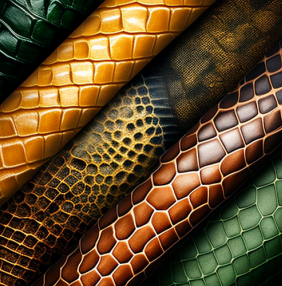
The most reliable way to tell crocodile and alligator leather apart is by examining the scales.
1. The ISO Pores
If you look closely at a crocodile skin handbag or wallet, you will notice a tiny dot on each scale. This is the Integumentary Sensory Organ (ISO) pore, a hair follicle remnant unique to crocodiles. Alligators do not have these pores. If you see the dots, it’s definitely crocodile.
2. Scale Symmetry
Alligator skin is famous for its symmetry. The scales on the belly are often more uniform and square-shaped compared to the more irregular, rectangular scales of a crocodile. This natural symmetry is one reason why alligator skin is so highly prized for high-end fashion items where pattern matching is crucial.
3. The Umbilical Scar
Another tell-tale sign is the umbilical scar. On an alligator, this scar is an elongated star shape located between the belly scales. It is often prominently featured in the center of large products like bags to prove authenticity. Crocodiles have a much less distinct scar.
Price Comparison: Which is More Expensive?
The answer is: It depends on the species. Generally speaking, Porosus Crocodile is the most expensive leather in the world, often surpassing American Alligator. However, high-quality American Alligator is typically more expensive than other common crocodile species like Nile or Caiman.
The Luxury Leather Price Hierarchy
- Porosus Crocodile (Crocodylus porosus): The "King of Reptile Leathers." Sourced mainly from Australia and Southeast Asia, this saltwater crocodile has a symmetrical, small scale pattern and is highly prized by top fashion houses like Hermès. It is the most expensive option.
- American Alligator (Alligator mississippiensis): Native to the Southeastern USA, this skin is famous for its lack of bone content (making it softer) and its elegant, less-porous scales. It is extremely valuable and close in price to Porosus.
- Nile Crocodile (Crocodylus niloticus): Found in Africa, this is a common high-end leather but typically commands a lower price than Porosus or American Alligator due to slightly larger scales.
- Caiman Crocodile (Caiman crocodilus): Sourced from South America, this is the most affordable entry-level exotic skin. It is more rigid due to calcium deposits.
The Verdict: Which is Better?
So, is crocodile leather better than alligator? The answer depends entirely on what you value most:
- Choose Alligator Leather if: You want a softer, more flexible feel, highly symmetrical scales, and a classic luxury look that is recognized worldwide. Ideally suited for watch straps and softer bags.
- Choose Crocodile Leather if: You prefer a more rugged, distinct pattern with visible pores (Nile/Freshwater), or if you are looking for the ultimate exclusivity of Porosus crocodile.
Both materials represent the pinnacle of leather craftsmanship. Whether you choose the refined elegance of alligator or the bold character of crocodile, you are investing in a material that is timeless, durable, and undeniably beautiful.
Conclusion
The battle between crocodile and alligator leather ends in a draw, with each having its own unique strengths. By understanding the differences in texture, pattern, and origin, you can make an informed choice that suits your style and needs.
Next Up
How can you tell if a crocodile wallet is real?
How durable is crocodile leather?

Content director at ChicCuir, passionate about sharing the stories behind our craft.